
For industrial facilities across Minnesota, insulation is one of those things that’s easy to overlook until it becomes a problem.
A well-insulated system keeps energy costs down, protects equipment from temperature swings, and helps prevent issues like condensation and corrosion before they start.
Finding the right industrial insulation contractor in Minnesota means working with a team that understands both the technical side of insulation and the day to day realities of running a facility.
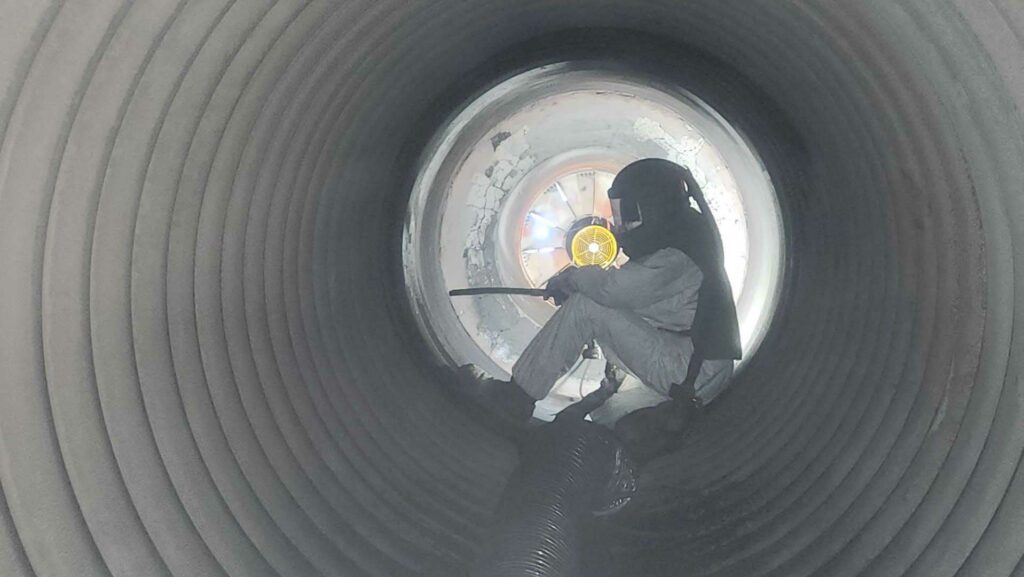
What Is Industrial Insulation?
Industrial insulation refers to the materials and installation work used to control temperature on pipes, tanks, boilers, ducts, and other equipment throughout a facility. For piping specifically, see our guide to industrial pipe insulation in Minnesota.
The goal is usually one of three things: retaining heat in a process, keeping heat away from equipment or workers, or preventing energy loss as systems run throughout the day.
In Minnesota, where facilities deal with cold winters and high-heat industrial processes in the same building, insulation plays a bigger role than many people realize.
Poorly insulated systems can lose significant energy, develop condensation problems in colder months, and put extra strain on heating and cooling equipment year-round.
Need Industrial Refractory Services in Minnesota?
Demo Plus provides expert installation, repair, and maintenance for boilers, furnaces, and high-temperature systems across St. Paul, Minneapolis, Duluth, Rochester, Bloomington, and Eagan.
Request a ConsultationWhere Industrial Insulation Is Used
Industrial insulation shows up in more places than most people expect. Common applications include:
- Pipe insulation for hot and cold process lines, reducing energy loss and preventing condensation
- Tank insulation to maintain consistent temperatures for stored materials or fluids
- Boiler and breeching insulation to improve efficiency and reduce surface temperatures
- Removable insulation covers for valves, flanges, and equipment that need regular access for maintenance
- Duct insulation to support HVAC efficiency in large industrial spaces
Each of these has different material and installation requirements, which is why it helps to work with a contractor who can assess the whole facility rather than treating each area as a separate project.
Why Insulation Matters for Plant Efficiency
Insulation might not be the most visible part of a facility, but it has a direct impact on operating costs. Facilities with worn, damaged, or missing insulation often see:
- Higher energy bills from heat loss or unwanted heat gain
- Increased wear on heating and cooling systems working overtime to compensate
- Condensation and moisture issues that can lead to corrosion over time
- Inconsistent process temperatures that affect product quality or equipment performance
Addressing these issues with proper insulation isn’t just a maintenance task, it’s an investment that often pays for itself through lower energy costs and fewer equipment repairs down the line.

Insulation and Refractory Work Often Go Together
For facilities with furnaces, kilns, boilers, or other high-temperature equipment, insulation work is often closely tied to refractory maintenance.
Refractory linings handle the extreme temperatures inside the equipment, while insulation manages heat on the outside and along connected piping and ductwork.
When one is repaired or replaced, it often affects the other.
If you’re not familiar with refractory systems, we’ve covered the basics in What Does a Refractory Company Do? and gone into more detail on materials and maintenance in our posts on industrial refractory materials for boilers and how to extend the life of your refractory lining.
Facilities planning insulation work during a turnaround or outage often find it’s the right time to address refractory needs as well, see our guide on boiler refractory repair for more on what that process looks like.
What to Expect From an Insulation Assessment
A good starting point for any insulation project is an on-site assessment.
This typically involves a contractor walking the facility to evaluate the current condition of insulation on pipes, tanks, boilers, and ductwork, identifying areas where insulation is missing, damaged, or undersized for the application.
From there, you’ll typically receive a written estimate broken down by area and material type, along with recommendations on which repairs are most urgent versus which can be scheduled for a future maintenance window.
This is especially useful for facilities planning a turnaround, since insulation work can often be coordinated alongside other maintenance to minimize downtime.

Serving Industrial Facilities Across Minnesota
Demo Plus, Inc. provides industrial insulation services to facilities throughout Minnesota, working alongside our refractory and industrial services teams to support plants in energy production, manufacturing, and processing.
From our base in St. Cloud, we regularly work with facilities across the state’s industrial corridors, including:
- Central Minnesota: St. Cloud, Sauk Rapids, Sartell, Little Falls, Alexandria, Brainerd
- Twin Cities Metro: Minneapolis, St. Paul, Elk River, Monticello, Buffalo, Anoka
- Southern Minnesota: Mankato, Owatonna, Faribault, Albert Lea, Austin, Rochester
- Western Minnesota: Willmar, Marshall, Hutchinson, Worthington
- Northern Minnesota: Duluth and the Iron Range
Whether you’re dealing with a specific insulation issue or planning a broader maintenance project, our team can travel to assess your facility and walk you through what’s needed, no matter where in Minnesota you’re located.
If your facility has insulation that’s overdue for an inspection or you’re planning an upcoming outage and want to make sure insulation is part of the scope, reach out to schedule an assessment.

Get in Touch
Contact Demo Plus, Inc. to schedule an industrial insulation assessment or request a quote for your facility in Minnesota.